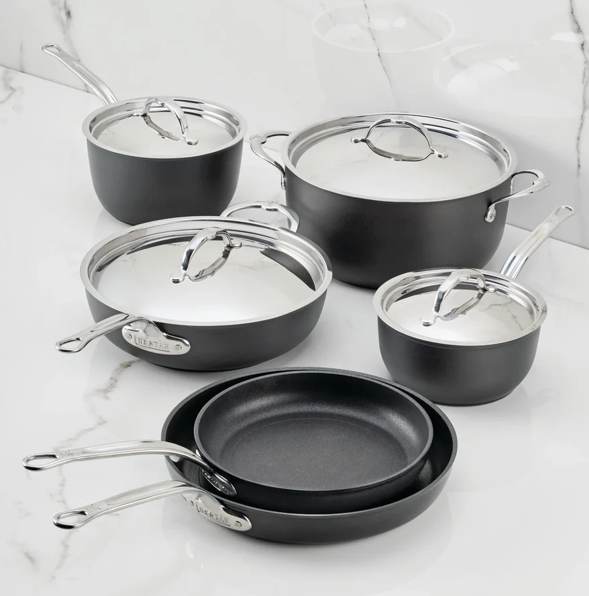
Modern cookware has evolved beyond basic nonstick surfaces and lightweight designs. Today, performance-driven kitchens demand stability, durability, and consistent heat control. One of the most advanced developments in this category is cookware that combines reinforced materials with engineered heat distribution systems to solve long-standing performance issues such as warping and coating degradation.
This article explores how next-generation nonstick systems are designed, what makes them structurally different from traditional cookware, and why material engineering plays a central role in long-term cooking performance.
Explore Hestan Culinary
Understanding the Engineering Behind Modern Nonstick Cookware
Nonstick cookware performance depends heavily on how well the base and surface layers work together. When these components are not properly engineered, the cookware becomes prone to uneven heating, surface damage, and reduced lifespan. Modern designs aim to eliminate these weaknesses through structural reinforcement and advanced material layering.
See also: Understanding Cold and Flu IV Therapy During Flu Season
Why traditional nonstick cookware struggles with durability
Traditional nonstick cookware often uses thin metal bases to reduce weight and cost. While this improves handling, it also reduces thermal stability. Thin bases heat unevenly and react quickly to temperature changes, which increases the risk of surface stress and long-term deformation.
Over time, this imbalance can lead to reduced performance consistency, especially under repeated high-heat cooking conditions.
The role of base construction in heat stability
The base of a pan plays a critical role in determining how evenly heat spreads across the surface. A weak or uneven base allows heat to concentrate in specific areas, creating hot spots that affect cooking control.
A reinforced base structure helps distribute heat more evenly, improving stability and reducing the risk of warping during temperature fluctuations.
Importance of multi-layer cookware design
Multi-layer cookware is designed to combine the strengths of different metals. Aluminum provides fast heat responsiveness, while stainless steel adds structural strength. When combined, these layers create a balanced system that improves durability and cooking precision.
This layered approach also enhances long-term performance by reducing stress on any single material layer.
What Is Hestan TITUM Fusion Cookware?
Advanced cookware systems are built around material science and structural engineering. Instead of relying on a single coating or metal, they integrate multiple technologies to improve performance, durability, and usability.
Learn more about Hestan TITUM Fusion cookware
Overview of TITUM Fusion material system
The TITUM Fusion system is designed to enhance nonstick performance through reinforced surface engineering. It combines multiple protective layers that improve resistance to wear while maintaining smooth food release properties.
This system focuses on balancing durability with cooking efficiency, ensuring consistent performance over time.
Diamond and titanium reinforced nonstick surface
A key feature of this cookware system is its reinforced surface layer. By integrating diamond and titanium elements into the nonstick coating, the surface becomes more resistant to scratches and abrasion.
This reinforcement helps maintain smooth food release while extending the lifespan of the coating under regular cooking conditions.
Italian craftsmanship and manufacturing standards
High-performance cookware relies not only on materials but also on precision manufacturing. Advanced production techniques ensure that each layer is properly bonded and aligned.
This level of craftsmanship improves consistency across cookware pieces and ensures that structural integrity is maintained throughout usage.
Double Impact Base Technology Explained
One of the most important innovations in modern cookware design is base stabilization technology. This system focuses on preventing deformation caused by rapid heating and cooling cycles.
How the base prevents warping under heat
Warping occurs when different areas of a pan expand at different rates. Double Impact base technology is designed to minimize this imbalance by evenly distributing heat stress across the surface.
This helps maintain a flat cooking surface even during high-temperature cooking conditions.
Aluminum core and stainless steel reinforcement
The combination of aluminum and stainless steel creates a balance between heat responsiveness and structural strength. Aluminum ensures quick and even heat distribution, while stainless steel reinforces the base to prevent bending or deformation.
Together, these materials create a stable cooking platform that supports consistent performance.
Performance benefits on induction cooktops
Induction cooking requires strong magnetic contact and stable base alignment. Reinforced construction ensures the pan maintains full contact with the cooktop surface.
This improves energy efficiency and ensures even heat transfer during cooking.
Cooking Performance and Heat Distribution Benefits
Heat distribution plays a major role in cooking consistency. Uneven heat leads to unpredictable results, while balanced heat flow improves control and precision.
Even heating across full cooking surface
Even heat distribution ensures that all parts of the cookware reach the same temperature at the same time. This eliminates cold spots and overheating zones, allowing for more consistent cooking outcomes.
It also improves control during temperature-sensitive cooking methods.
Better browning and controlled searing
Controlled heat flow helps food develop more even browning. When the cooking surface remains stable, proteins and sugars react consistently, improving texture and flavor development.
This allows for better control over cooking results without sudden heat fluctuations.
Stability during high-temperature cooking
High-temperature cooking requires cookware that can maintain structural integrity under stress. Reinforced bases and multi-layer construction help maintain stability even when exposed to rapid heating.
This ensures that cooking performance remains consistent under demanding conditions.
Durability and Long-Term Nonstick Performance
Durability is one of the most important factors in cookware selection. A strong nonstick surface must maintain its performance while resisting wear over time.
Resistance to coating breakdown
Coating breakdown usually occurs when the base flexes or when heat is distributed unevenly. Reinforced structures help reduce stress on the coating layer, improving long-term performance stability.
This helps maintain smooth food release over extended use.
Scratch resistance and structural integrity
Reinforced nonstick surfaces are designed to resist scratches and abrasions caused by regular cooking tools. This helps maintain surface smoothness and reduces performance degradation.
Structural integrity also ensures the cookware maintains its shape and functionality over time.
Maintenance and usability advantages
Durable cookware is easier to maintain because it resists buildup and surface damage. Smooth nonstick surfaces simplify cleaning and reduce the need for intensive maintenance routines.
This improves long-term usability and cooking convenience.
Is TITUM Fusion Cookware Worth It for Modern Kitchens?
Modern kitchens require cookware that balances durability, efficiency, and performance consistency. Advanced engineering solutions address common issues found in traditional cookware by improving both structure and surface design.
Comparison with standard nonstick cookware
Standard nonstick cookware often focuses on lightweight construction and basic coating systems. While functional, these designs may not provide long-term stability under repeated high-heat use.
Advanced systems prioritize structural reinforcement and heat control, resulting in more consistent cooking performance.
Professional-grade usability and reliability
Professional cooking environments demand cookware that performs reliably under continuous use. Stability, heat distribution, and durability are essential for maintaining consistency.
Modern engineered cookware is designed to meet these requirements by combining advanced materials with reinforced structural design.
Frequently Asked Questions
1. What makes modern nonstick cookware different from traditional designs?
Modern cookware uses multi-layer construction and reinforced materials to improve heat distribution and durability.
2. Why does cookware warp during cooking?
Warping occurs due to uneven heat expansion in thin or poorly reinforced metal bases.
3. How does titanium reinforcement improve nonstick surfaces?
Titanium reinforcement enhances scratch resistance and extends coating lifespan under regular use.
4. Why is aluminum used in cookware construction?
Aluminum provides fast and even heat distribution, improving cooking control and consistency.
5. Is multi-layer cookware better for induction cooking?
Yes, multi-layer construction improves magnetic stability and ensures efficient heat transfer on induction cooktops.
Conclusion
Next-generation nonstick cookware is defined by structural engineering, material innovation, and heat distribution control. By addressing weaknesses in traditional designs, modern systems provide improved durability, better cooking performance, and long-term stability.
Through reinforced bases, advanced coatings, and multi-layer construction, cookware can maintain consistent performance even under demanding conditions. This shift in design philosophy ensures that modern kitchens benefit from greater reliability, precision, and efficiency.
