Introduction
Plastic manufacturing requires precise control over material conditions to achieve consistent product quality and efficient production. One of the most important factors influencing the performance of plastic resins is moisture content. Many plastic materials absorb moisture from the surrounding environment during storage, transportation, and handling. If this moisture is not removed before processing, it can lead to various production challenges that affect both product quality and operational efficiency.
Manufacturers across industries invest heavily in moisture control technologies to ensure that plastic materials are properly prepared before entering molding, extrusion, or other processing operations. Effective drying systems help maintain the desired material properties and support stable manufacturing conditions.
Among the most widely used solutions are Dehumidifier Dryers, which are specifically designed to remove moisture from plastic resins before processing. These systems play a critical role in improving product quality, reducing defects, and enhancing overall manufacturing performance.
Why Is Moisture a Problem in Plastic Processing?
Moisture can significantly affect the behavior of plastic materials during manufacturing. Many engineering plastics and hygroscopic resins absorb water molecules that become trapped within the material structure.
When these moisture-containing materials are exposed to high processing temperatures, the absorbed water can vaporize and interfere with the manufacturing process.
Common Defects Caused by Moisture
Excess moisture in plastic resins may result in several production defects, including:
- Surface blemishes
- Bubbles
- Voids
- Silver streaks
- Cracking
- Poor dimensional accuracy
These issues can reduce product quality and increase production waste.
Impact on Material Properties
Moisture can also affect the molecular structure of certain plastics during processing.
This may lead to reduced mechanical strength, lower impact resistance, and decreased durability in finished products. Maintaining proper moisture levels is therefore essential for achieving optimal material performance.
What Are Dehumidifier Dryers?
Dehumidifier dryers are specialized systems designed to remove moisture from plastic resins before they are processed.
Unlike conventional hot air drying methods, dehumidifier dryers provide low humidity air that enables more effective moisture removal from hygroscopic materials. This process helps ensure that plastic pellets reach the required dryness levels before entering production equipment.
How Dehumidifier Dryers Work
These systems operate by producing dry air with a very low dew point.
The dry air is heated and circulated through the plastic material, where it absorbs moisture from the resin. The moisture-laden air is then regenerated through the drying system, allowing the process to continue efficiently.
This controlled drying cycle helps achieve consistent moisture removal across different material types.
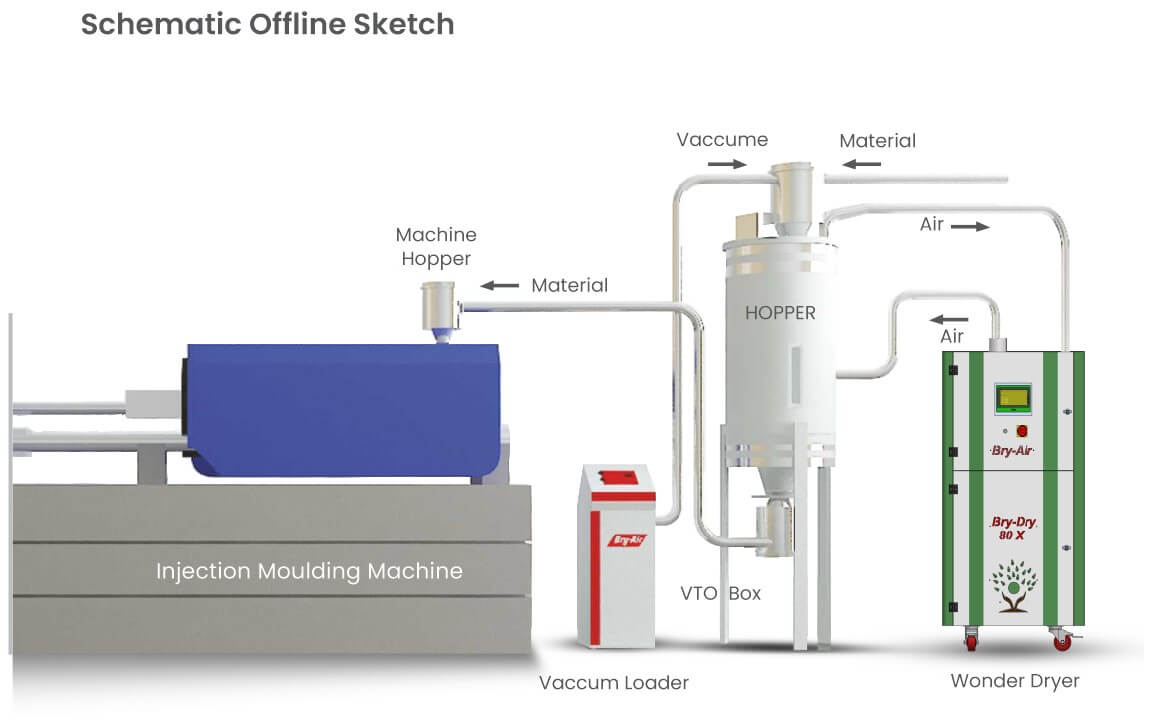
Key Components of a Dehumidifier Dryer
A typical dehumidifier dryer includes:
- Drying hopper
- Air blower
- Heating system
- Dehumidification unit
- Control system
- Regeneration section
These components work together to maintain optimal drying conditions throughout the process.
How Do Dehumidifier Dryers Improve Product Quality?
Proper drying has a direct impact on the quality of finished plastic products.
By removing excess moisture from raw materials, dehumidifier dryers help create stable processing conditions that support consistent manufacturing results.
Improved Surface Finish
Dry materials process more uniformly than moisture-laden resins.
This helps manufacturers achieve smoother surfaces, improved appearance, and higher quality finishes in molded or extruded products.
Enhanced Mechanical Strength
When moisture is properly removed, the polymer structure remains more stable during processing.
As a result, finished products often demonstrate improved strength, durability, and performance characteristics.
Better Dimensional Stability
Consistent moisture control supports precise processing conditions and helps maintain dimensional accuracy.
This is especially important for components that require tight manufacturing tolerances.
Why Are Hygroscopic Plastics More Challenging to Process?
Certain plastic materials readily absorb moisture from the atmosphere.
These hygroscopic materials require special attention because moisture penetrates deep into the resin rather than remaining on the surface.
Common Hygroscopic Materials
Examples of moisture-sensitive plastics include:
- Nylon
- Polycarbonate
- PET
- ABS
- PBT
- Acrylic materials
These resins often require advanced drying systems to achieve acceptable moisture levels before processing.
Limitations of Conventional Drying
Traditional hot air dryers may not effectively remove deeply absorbed moisture from hygroscopic plastics.
Without adequate moisture control, processing problems can persist even after extended drying periods.
How Does a Plastic Pellet Dryer Support Manufacturing Efficiency?
Material preparation is a critical step in maintaining efficient production operations.
A properly designed plastic pellet dryer helps ensure that plastic pellets are conditioned to the correct moisture level before entering molding or extrusion equipment.
By delivering consistently dried material, these systems contribute to stable processing conditions and improved manufacturing outcomes.
Reduced Scrap Rates
Moisture-related defects frequently result in rejected parts and wasted materials.
Proper drying helps minimize these defects and improves overall production yields.
Fewer Processing Interruptions
Moisture contamination can cause machine instability and production delays.
Dry materials support smoother operations and help reduce downtime associated with quality issues.
Improved Production Consistency
Consistent material conditions enable manufacturers to maintain stable process parameters across production runs.
This improves repeatability and helps ensure predictable product quality.
What Industries Depend on Effective Plastic Drying?
Many industries rely on moisture-sensitive plastic materials that require precise drying before processing.
Proper moisture control supports product performance and manufacturing reliability across various applications.
Automotive Manufacturing
Automotive components often require exceptional strength, durability, and dimensional stability.
Effective drying helps ensure that plastic materials meet demanding industry standards.
Electronics Industry
Electronic housings and precision plastic components require consistent material properties.
Moisture control supports quality manufacturing and reliable product performance.
Medical Equipment Production
Medical applications often involve strict quality requirements and precise manufacturing processes.
Proper drying contributes to product consistency and material integrity.
Packaging Industry
Packaging manufacturers use a variety of plastic materials that benefit from controlled moisture levels and stable processing conditions.
What Factors Should Be Considered When Choosing a Dryer?
Selecting the right drying system involves evaluating several important factors.
Material Characteristics
Different plastics have unique moisture absorption behaviors and drying requirements.
Understanding these characteristics helps determine the most appropriate drying solution.
Production Capacity
Drying equipment should be sized according to material throughput and operational demands.
Proper capacity planning ensures consistent performance without production bottlenecks.
Energy Efficiency
Modern drying systems are designed to maximize moisture removal while minimizing energy consumption.
Energy-efficient equipment can help reduce operating costs while supporting sustainability goals.
How Is Plastic Drying Technology Evolving?
Manufacturers continue to seek more efficient and intelligent drying solutions.
Advances in automation, process controls, and energy management are improving drying system performance across the plastics industry.
Modern systems increasingly feature advanced monitoring capabilities that help operators maintain optimal drying conditions while reducing energy usage.
These innovations support higher productivity, better product quality, and improved operational efficiency.
As manufacturing standards continue to evolve, effective moisture control will remain an essential component of successful plastic processing operations.
Conclusion
Proper moisture removal is essential for achieving high-quality plastic products and maintaining efficient manufacturing processes. Excess moisture can lead to defects, reduced material performance, increased waste, and production inefficiencies. Dehumidifier dryers provide an effective solution by removing absorbed moisture and creating the stable conditions necessary for consistent processing.
By utilizing advanced drying technology, manufacturers can improve product quality, enhance operational efficiency, and reduce production challenges associated with moisture contamination. As industries continue to demand higher quality standards and greater manufacturing precision, reliable drying systems will remain a critical part of successful plastic processing operations.
For organizations seeking advanced drying and moisture control solutions, Bry-Air offers innovative technologies designed to support efficient plastic processing and superior product quality across a wide range of industrial applications.
