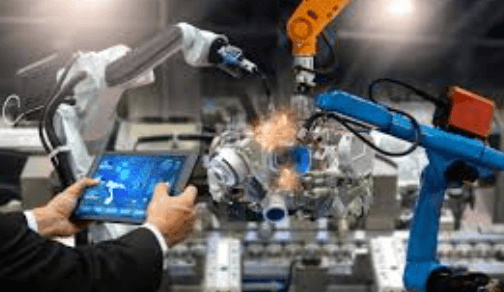
IoT is accelerating smart industries by enabling real-time data collection, interoperable device ecosystems, and autonomous optimization across manufacturing, logistics, and facilities. Sensors, analytics, and automation create an integrated fabric that yields data-driven decisions, closed-loop control, and predictive maintenance. Secure, standardized networks support resilient supply chains with verifiable provenance, while edge computing and dashboards drive proactive actions. The result is measurable gains in uptime, energy efficiency, and throughput, inviting deeper consideration of implementation tradeoffs and ROI.
What Iot Unlocks for Smart Industry
IoT unlocks transformative capabilities for smart industry by enabling实时 data collection, device interoperability, and autonomous process optimization across manufacturing, logistics, and facilities management.
The approach emphasizes predictive maintenance and energy optimization, driving reduced downtime and improved efficiency.
Data-driven dashboards, standardized protocols, and edge computing enable scalable resilience, proactive decision-making, and flexible operations aligned with evolving demands across complex industrial ecosystems.
How Sensors, Analytics, and Automation Converge in Factories
Sensors, analytics, and automation converge to form an integrated fabric within modern factories, enabling real-time visibility, data-driven decision making, and closed-loop control across production lines.
This convergence yields measurable performance gains through optimization metrics, predictive maintenance, and adaptive scheduling.
The approach rests on rigorous data governance, ensuring quality, lineage, and compliance while enabling scalable, future-ready automation architectures for continuous improvement.
Building a Secure, Interoperable Iot Ecosystem for Supply Chains
With supply chains increasingly spanning global networks, securing and interoperating Internet of Things ecosystems is paramount for reliable operations, traceability, and resilience. The secure, interoperable framework prioritizes secure firmware updates, continuous supply chain visibility, and adherence to interoperable standards.
Emphasizing proactive risk management, architectures enable modular integration, verifiable provenance, and scalable security controls to sustain trust and operational freedom across complex, distributed networks.
From Data to Action: Measuring Value and ROI in Smart Industries
Measuring value and ROI in smart industries hinges on translating data into actionable metrics that align with operational goals. Data governance frameworks standardize provenance, quality, and accountability, enabling credible decision support. ROI modeling quantifies savings, throughput gains, and downtime reductions, translating them into traceable business cases. Forward-looking analytics synthesize assets, processes, and demand signals, guiding disciplined investment and continuous improvement within autonomous, interoperable ecosystems.
See also: croatiawire
Frequently Asked Questions
How Do We Ensure Worker Privacy With Iot Deployments on the Factory Floor?
Answer: Privacy by design and continuous auditing enable robust worker privacy in IoT deployments on the factory floor, with rigorous data minimization, transparent access controls, and immutable telemetry logs guiding proactive risk mitigation and future-facing governance.
What Are the Hidden Costs of Maintaining Iot Devices Long-Term?
Hidden costs emerge as devices age and firmware requires frequent updates; long term maintenance, cybersecurity patches, and supply chain dependencies demand disciplined budgeting, proactive replacements, and standardized interoperability to sustain performance, reliability, and operational freedom across evolving industrial ecosystems.
How Can SMES Scale Iot Without Excessive Complexity or Risk?
SMEs can scale IoT by adopting scalable architecture and secure onboarding, reducing fragmentation. The approach emphasizes modular platforms, standardized protocols, automated updates, and rigorous risk assessment, enabling forward-looking operations with measurable ROI and freedom from vendor lock-in.
Which Standards Most Impact Cross-Border Interoperability and Compliance?
Standards convergence drives cross-border compliance by harmonizing data models, security, and interoperability. The most impactful frameworks include IEC 62443, ISO/IEC 27001, ISO/IEC 30141, and IETF/ONE standards, enabling scalable, freedom-oriented cross-border adoption despite regulatory variance.
What Are the Best Practices for Iot Data Lifecycle Governance?
Best practices for IoT data lifecycle governance emphasize clear data ownership and strict data retention policies, enabling auditable, forward-looking control; governance leans on defined roles, automated lineage, and secure, scalable storage to empower freedom within compliance.
Conclusion
The data converge to reveal a verifiable truth: smart industries fail not for lack of sensors, but for unbridled data silos and insecure interoperability. When sensors, analytics, and automation fuse within a secure, standardized IoT fabric, organizations achieve measurable gains in uptime, efficiency, and predictive maintenance. The forward path is clear: invest in edge-enabled, provenance-rich networks, establish interoperable protocols, and quantify ROI through closed-loop optimization, ensuring resilient value generation across manufacturing, logistics, and facilities.
