
The worst surprise in ponds does not come in the cold weather. It waits until spring. You clear the last of the melting ice, look down, and find dead fish near the surface and a cracked float on the bottom. A hard winter tests both your fish and your Kasco fountains, and most of the damage traces back to a few choices made before the freeze began.
So here is the real question. Should you keep Kasco fountains running all winter, or pull them out before the ice sets in? Get that wrong, and you pay for it one of two ways. Either the fish suffocate under a sealed surface, or the equipment cracks in the ice. Neither bill is fun. Here is how to land on the right side of it.
Why a Frozen Pond Puts Your Fish at Risk
A sheet of solid ice does more than look cold. It seals the pond off from the air above. Once that happens, the gases from rotting leaves and fish waste have nowhere to go, and fresh oxygen cannot get in. Oxygen drops, toxic gas builds, and fish can suffocate under the ice. Pond managers in cold states point to this sealed surface as a leading cause of winter fish kills.
A running fountain or aerator breaks the seal. Moving water resists freezing, so the churn holds a hole open in the ice. That open patch lets gas escape, and air reaches the water, which keeps the fish breathing through the worst of the season.
The Supercooling Trap that Catches Pond Owners
This part trips up a lot of careful owners. Run your unit the wrong way in a deep pond, and you can hurt the fish you meant to protect. Here is why. Fish ride out winter in the warmer water near the bottom. If a fountain or a deep diffuser drags that warm layer up, it mixes the whole pond. The bottom loses its warm pocket, and the water chills from top to bottom.
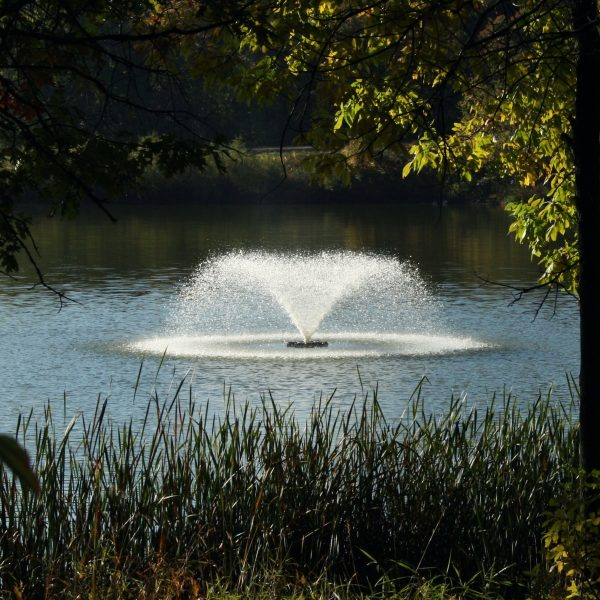
The fix is placement. Aeration guides suggest raising the diffuser or moving an aerating unit to roughly half the pond depth in winter. In a six-foot pond, that means around three feet down. You still hold a hole open at the surface, yet the cold deep water stays put for the fish. The mistake most people make is treating winter aeration like summer aeration. In summer, you want the whole pond stirred. In winter, you want movement up top and stillness down low, which is close to the opposite goal.
Setting Up Your Kasco Fountain Before the Freeze
A little work in late fall saves a lot of grief in January. Before the first hard freeze, walk through a short list:
- Check the float, power cord, and GFCI panel for any wear or damage.
- Clear the bottom screen so the intake does not clog once ice forms.
- Move an aerating unit shallower to keep an opening without chilling the depths.
- Plan for power cuts, since a stalled unit lets the hole freeze shut
- Run it without a timer once the cold sets in, so it never pauses long enough to ice over.
Skip these, and a small problem in November turns into a dead pond by February.
When to Run it And When to Pull it
Not every Kasco fountain belongs in the water all winter. A decorative display fountain is built to be seen, not to fight ice. In a region with a hard, lasting freeze, that spray unit is often better lifted out before the pond locks up. Ice can crush the float and strain the motor, and the display is not doing winter any favors anyway.

An aerating unit is a different story. Positioned shallow and run around the clock, it can hold the hole open and keep the fish alive. Honestly, plenty of owners in harsh climates do both throughout the year. They pull the display fountain for winter and let an aerator carry it through the cold months. There is no single rule that fits every pond. Your climate, your pond depth, and whether you keep fish all push the answer one way or another.
See also: The Importance of Strategic Planning in Business
Restarting in Spring Without New Damage
When the thaw comes, resist the urge to chip or smash any ice that has closed over. The shock can injure or kill the fish below. Pour warm water to open a frozen hole instead. Once the surface clears, look over the float and motor before you switch the unit back on.
If the cold did get to the motor, that is not always the end of it. Kasco motors can go back to the factory for repair, so one rough winter does not force a full replacement. Check the float too, since a cracked one needs sorting before the unit will sit right again. Give the screen and intake a quick clean while you are at it, because a winter under ice tends to leave debris packed against them.
A hard winter does not have to cost you fish or a fountain. Keep a hole open, leave the warm bottom layer alone, watch your power supply, and pull the display unit if your winters bite hard. Handle those four things, and spring opens to clear water and live fish, not a cleanup you did not plan for.
