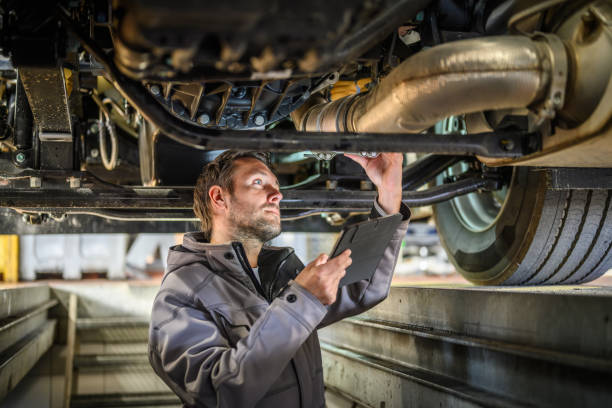
When everything is running smoothly, most fleet managers don’t give much thought to repairs. Trucks leave on time. Drivers take their routes. Customers receive deliveries with little hassle. That’s a confidence-building routine. Until something changes. A warning light comes on. Delays are due to a tire problem. A truck won’t start before a valuable shipment. A seemingly minor inconvenience can disrupt schedules, customer expectations, and business operations. It’s at this point that many companies discover that truck repair is not just about fixing issues. It’s all about moving the whole fleet.
Businesses that rely on transportation understand how quickly delays can multiply. When one truck gets stuck on the road, it can cause delivery delays, rerouting, and increased stress for drivers. That’s why you need to select a reliable semi truck repair shop in Crescent to ensure your fleet runs smoothly. Repairs are not just a fix-it. They support continuity. They can help businesses meet their obligations, even when vehicles are subject to the wear and tear of constant use.
Businesses tend to seek out service providers who grasp the mechanical aspects of repairs, as well as the practicalities of business. Companies like MSR Manufacturing & Trucks Sales collaborate with fleet owners who can’t afford extended downtime. The goal is not just to replace parts. It includes early identification of concerns, appropriate inspections, and assistance to operators in making informed decisions about maintenance schedules. Prevention matters. Planning matters. Timing matters.
Small Mechanical Issues Don’t Stay Small
Many truck issues start in silence.
A slight vibration. Reduced braking performance. Unusual engine sounds.
Drivers can see them but do not recognize their importance. Fleet managers may delay inspections due to deliveries still pending. The challenge is that commercial vehicles travel long distances in challenging environments. Small issues can escalate into bigger problems if not addressed.
A faulty belt could cause the engine to overheat. Worn brakes can be a safety hazard. Tire problems can contribute to roadside disruptions. These are all bad times. They cause disruption when businesses are least expecting it.
See also: IoT and the Rise of Smart Industries
Preventive Maintenance Aids Daily Operations
Most companies would rather avoid an emergency altogether.
Regular checks detect wear before it becomes a problem. Oil changes, brake checks, suspension assessments, and fluid monitoring all play a role in vehicle reliability. These measures might appear to be simple. However, they are crucial to minimizing unplanned downtime.
Predictability is another benefit of preventive maintenance. Fleet managers can plan repairs for when they are needed, not when they are urgent. Vehicles are safer for drivers. There are fewer delays for customers. It’s not just the repair bay.
It affects confidence.
Downtime Carries Hidden Costs
Repair expenses are often the first concern businesses think about.
There are other costs.
Delayed shipments. Overtime wages. Missed appointments. Strained customer relationships.
A truck sitting idle does not generate revenue. Meanwhile, businesses continue absorbing operational expenses. Even short interruptions can affect planning when several deliveries depend on the same vehicle.
This is one reason why experienced repair providers focus on efficiency. The objective is not to rush through repairs. It is restoring functionality while maintaining quality standards that reduce repeat issues later.
Fleet Needs Can Vary Considerably
Not every commercial operation functions in the same way.
Long-haul fleets face different challenges compared to local delivery services. Construction vehicles experience conditions that differ from refrigerated transport units. Mileage patterns. Load requirements. Operating environments.
All of these factors influence maintenance priorities.
A repair strategy that works well for one business may not suit another. This is where practical experience becomes valuable. Understanding how trucks are used helps determine inspection intervals, replacement schedules, and service recommendations that support long-term performance.
Drivers Notice the Difference
Reliable equipment affects more than delivery schedules.
Drivers spend long hours behind the wheel. They rely on braking systems, steering responsiveness, lighting, and engine performance every day. Well-maintained vehicles contribute to confidence during demanding routes and changing weather conditions.
The opposite is also true.
Recurring mechanical concerns create frustration. Uncertainty grows when drivers question whether equipment will perform consistently. That uncertainty can influence productivity and morale over time.
Vehicle condition matters.
Repair Planning Supports Business Growth
Many businesses focus on expansion goals.
More routes. Additional contracts. Larger service areas.
Growth introduces new responsibilities. Fleets operating at higher capacity often require stronger maintenance planning to support increased demands. Ignoring repair needs while expanding operations creates vulnerabilities that eventually become difficult to manage.
Businesses evolve.
Maintenance practices should evolve as well.
A structured approach to truck repairs allows companies to pursue growth while protecting the systems that support their daily activities.
Conclusion
Commercial fleets depend on reliability. Deliveries, customer relationships, driver confidence, and operational efficiency all connect back to vehicle performance. Truck repair services help address problems as they arise, but their value often extends far beyond that.
Businesses that prioritize inspections, preventive maintenance, and timely repairs are better positioned to manage unexpected challenges. Because when a truck breaks down, the impact rarely stops with the vehicle itself. Routes change. Timelines shift. Pressure increases.
Keeping fleets running requires attention before problems grow larger.
That is often the difference between reacting to disruption and staying ahead of it.
